
About the author: Pastor Robert Hammond has more than 20 years of experience in medical research and health communications.
Summary: CBD products are now widely available. Products include oils, lotions, creams and even candies and other food products that contain CBD oil. This short article examines biblical principles that should inform our decision about using CBD.
(Originally published October 14, 2021. Last updated October 31, 2025).
Introduction
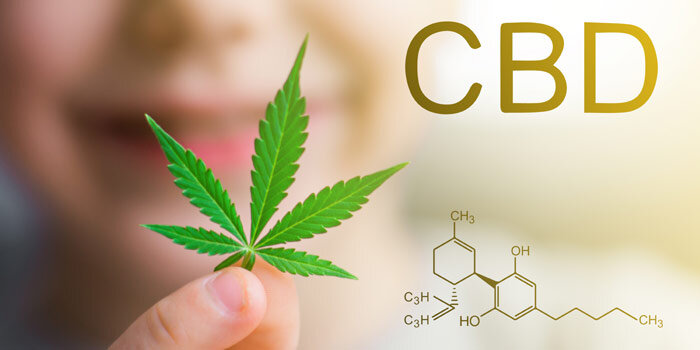
CBD is an abbreviation for cannabidiol. It is found in both the hemp and marijuana varieties of cannabis. In 2018, the federal farm bill made it legal to grow and sell products made from hemp so long as they don’t contain more than 0.3 percent of THC (the part of the plant that makes a person feel high). CBD is marketed as a treatment for everything from insomnia to pain to mood disorders. Although the Bible does not directly address the use of CBD, Christians would be wise to consider biblical principles that guide our decision about whether or not to use CBD.
First, consider the biblical principle of stewardship.
In several passage, the Bible implies that we should seek to be good stewards of our health. In 1 Corinthians 6:19, the Lord asks, “What? know ye not that your body is the temple of the Holy Ghost which is in you, which ye have of God, and ye are not your own?” In Revelation 4:11 the Bible reveals that the Lord created all things for his purposes. Since the LORD has created our bodies and indwelt them for his good purposes, Christians would be wise to take reasonable measures to maintain good health. If CBD could be safely used to help achieve and maintain good health, we might conclude that using CBD is consistent with our call to be good stewards of our bodies.
However, a 2023 report from the Food and Drug Administration (FDA) states, “The use of CBD raises various safety concerns, especially with long-term use.” The FDA raised specific concerns including “the potential for harm to the liver, interactions with certain medications and possible harm to the male reproductive system.”
In January 2021, the Harvard Medical School published an article that reported potentially serious drug interactions between CBD and medications including, a common blood thinner (warfarin), a heart rhythm medication (amiodaron), a thyroid medication (levothyroxine), and several medications for seizure, including clobazam, lamotrigine, and valproate.
In October 2019, the FDA also reported that animal studies have revealed that using CBD during pregnancy can harm unborn animals. That research implies that mothers who use CBD during pregnancy may harm their unborn child.
The FDA has also expressed concern about “reports of CBD potentially containing unsafe levels of contaminants, including pesticides, heavy metals, and THC.”
Given the current concerns regarding the safety of CBD, we conclude that using CBD is not consistent with our call to be good stewards of our health.
Our call to wise financial stewardship (Luke 16; 1 Timothy 6:17-19).
Americans are well-acquainted with the high-cost of medicines. When it comes to medicines that have been proven to be generally safe and effective, the high cost is justified -- especially when we consider the potential cost of not treating an illness. However, paying a large amount of money for treatments that are not proven to be safe and effective is arguably inconsistent with our call to wise financial stewardship.

In October 2025, one ounce of Hempworx brand CBD oil (500 mg concentration) cost $79.00. (Source: Hempworx, accessed October 31, 2025). That expense might be justified if CBD was proven to be effective for treating the conditions for which it is marketed. Unfortunately, the FDA has found CBD to be safe and effective only for the treatment of specific forms of epilepsy. (In 2019, the FDA approved EPIDIOLEX®, a prescription formulation of CBD, for treating specific forms of epilepsy).
In a December 2018 report from the Mayo Clinic, Dr. Brent Bauer offered, “While CBD is being studied as a treatment for a wide range of conditions, including Parkinson's disease, schizophrenia, diabetes, multiple sclerosis and anxiety, research supporting the drug's benefits is still limited. A November 2019 report from the Journal of the American Medical Association adds that evidence of the effectiveness of CBD for treating mental disorders is “scarce.”
Given the lack of sufficient evidence that CBD is effective for treating conditions other than epilepsy, we conclude that spending significant money on CBD is not consistent with our call to be wise financial stewards.
Our call to be godly examples.
In Titus 2:7, Paul calls Titus to demonstrate “a pattern of good works” in “all things.” There, he taught Titus the principle of striving to be a godly example in every part of his life.
Using CBD can compromise our call to be godly examples. CBD products may legally contain up to 0.3% THC -- the compound in marijuana that causes people to feel high. A 2022 article published by researchers at Johns Hopkins University reported that THC was detected in 35% of topical CBD products. This matters because THC can sometimes be detected in workplace drug tests.
Consider two possible consequences of testing positive for THC as a result of using CBD:
First, testing positive for THC could result in losing your job. A 2024 legal analysis concluded that “employees who test positive for marijuana and claim it was due to legal hemp products containing CBD” have found it difficult to prevail in court. A 2025 report addressesing federal employees stated, “if CBD use leads to a positive THC drug test, you can face discipline up to removal under the federal Drug-Free Workplace Program.”
Second, testing positive for THC also violates our call to refrain from the “appearance of evil” (1 Thes. 5:22). If we test positive for THC, many will conclude that we are using recreational marijuana. Although that would be a wrong conclusion, our testimony would nonetheless be compromised. And when our testimony is harmed, our example is harmed.
What about our liberty in Christ?
Some will argue that they have liberty in Christ to use CBD. In his epistles to the Corinthians, Paul addresses this argument: "All things are lawful unto me, but all things are not expedient: all things are lawful for me, but I will not be brought under the power of any" (1 Corinthians 6:12).
There, Paul addressed Christians who argued that they possessed liberty to eat meat that had been sacrificed to idols. Paul didn’t deny their liberty. Rather, he denied the wisdom of exercising that liberty. He cautioned that while some practices are technically permissible, they are not spiritually profitable. Implied is the wisdom of forgoing a liberty when exercising that liberty might cause spiritual harm to self or others (either by encouraging back-sliding or by discouraging growth).
Like the meat from the pagan temples, CBD is not expressly forbidden by either civil law or the Bible. However, using CBD may violate the biblical mandate to forgo a liberty when exercising that liberty may be spiritually dangerous. Because using CBD arguably violates several biblical principles, we conclude that it is unwise to exercise the liberty to use CBD.
Conclusion
While CBD might someday be proven to be safe and effective for treating a variety of medical conditions, that is not yet the case. Today, the questions regarding both the safety and effectiveness of CBD lead us to conclude that using CBD is not consistent with our call to be wise stewards of both our health and our finances. Further, testing positive for THC will harm our testimony. As such, we conclude that it is unwise to exercise the liberty to use CBD.
Readers are invited to send comments to Pastor Robert Hammond at hammond.robert@gmail.com.
Copyright © 2020, 2025 Robert W. Hammond.