

Christ

The Crown of Thorns: A Visual Representation of Sin and Sacrifice

I’m pleased to share this article, which was written by a member of Long Hill Baptist Church. Originally published July 4, 2025.

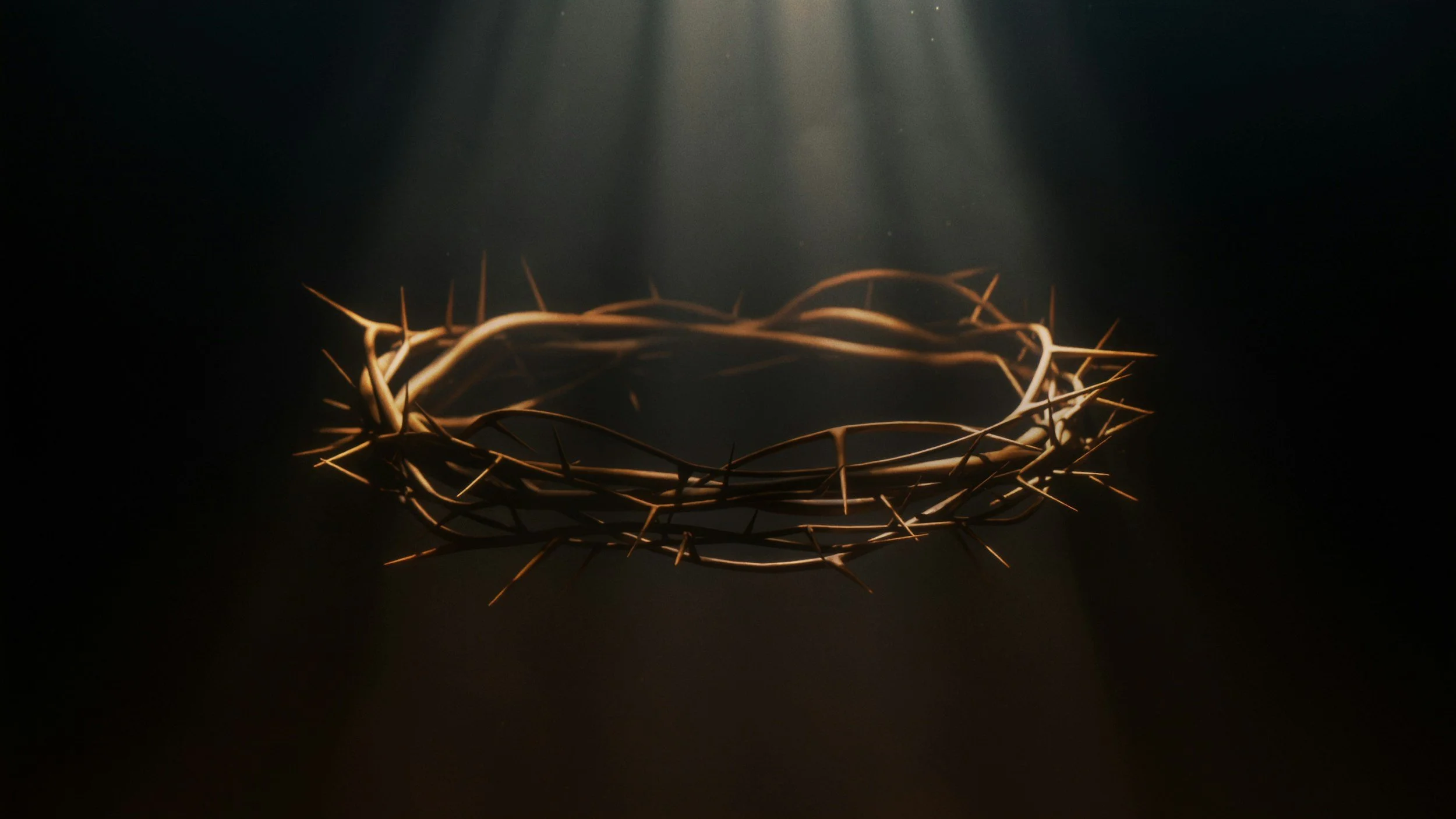
The crucifixion of Jesus Christ is not only a pivotal event in human history but also a moment filled with powerful imagery and spiritual meaning. Among the instruments of His suffering, one stands out for its haunting irony and deep symbolism: the crown of thorns. While the Roman soldiers intended it as a cruel joke to mock Jesus’ kingship, this twisted crown served a greater purpose in God’s redemptive plan. It visibly represented the weight of human sin, the curse of the fall, and the humility of a King who chose to carry it all.

Thorns as a Symbol of the Curse

To understand the significance of the crown of thorns, we must look back to Genesis 3. After Adam and Eve disobeyed God, He declared,

“Cursed is the ground for thy sake... thorns also and thistles shall it bring forth to thee” (Genesis 3:17–18).

Thorns became a symbol of sin's consequences. They were a reminder of the brokenness that entered the world through rebellion. Their appearance was accompanied by pain, toilsome labor, suffering, and the separation between God and humanity.

When the Roman soldiers pressed a crown of thorns onto Jesus' head (Matthew 27:29, John 19:2), they were unknowingly placing the very consequence of sin upon the sinless Son of God. He wore it in full view of the world, bearing the consequences of human disobedience.

A Mockery That Revealed True Kingship

The soldiers meant to humiliate Jesus. They gave Him a purple robe, a reed as a mock scepter, and mocked Him, saying, “Hail, King of the Jews.” Their actions were sarcastic and cruel. Yet in a deeper way, they revealed a profound truth.

Jesus truly is King.

“My kingdom is not of this world:” (John 18:36).

While earthly kings wear crowns of gold and rule through force, Jesus wore a crown of thorns and ruled through sacrifice. His kingship was one of humility, service, and love. What the soldiers meant as mockery became a symbol of His true identity and mission.

The Visible Weight of Sin

The crown of thorns was more than an instrument of pain. It was a powerful image of what Jesus came to do.

"Christ hath redeemed us from the curse of the law, being made a curse for us: for it is written, Cursed is every one that hangeth on a tree:" (Galatians 3:13)

“But he was wounded for our transgressions, he was bruised for our iniquities...” (Isaiah 53:5).

The thorns that pierced His skin pointed to the deeper suffering He endured. They represented every sin, every shame, every curse that He chose to carry. In that moment, Jesus became our substitute. He bore our guilt in full, wearing the curse on His head so we would not have to.

From Thorns to Glory

The story does not end with thorns. Jesus rose from the grave, victorious over sin and death. Revelation 19:12 tells us that, “On his head were many crowns.”

Jesus, who once wore a crown of mockery, now wears crowns of glory. The suffering Savior is now the reigning Lord. The crown of thorns has been exchanged for the crown of eternal kingship. His victory is complete, and because of it, our hope is secure.

Conclusion

Jesus wore the crown of thorns to take upon Himself the full curse of sin. What began in the Garden of Eden with Adam’s fall was atoned for on the cross with Jesus' sacrifice. The thorns that once represented pain and separation now remind us of love, redemption, and victory.

That painful crown was not just a Roman punishment. It was a holy message. Jesus bore the curse so we could receive the crown of life. What was once a symbol of shame has become a testimony of hope and healing.

“Be thou faithful unto death, and I will give thee a crown of life.”
(Revelation 2:10)

"Why do I need Jesus since I already believe in God?"

cross.jpg

Pastor Robert Hammond

"Why do I need to believe in Jesus since I already believe in God?" That is an excellent question, indeed!

The simplest answer I can offer is that Jesus taught that we cannot have a relationship with God the Father unless we have a relationship with God the Son. Jesus said, "I am the way, the truth, and the life: no man cometh unto the Father, but by me" (John 14:6). Earlier, Jesus also said, "If God were your Father, ye would love me: for I proceeded forth and came from God; neither came I of myself, but he sent me." I'm sure you'll agree that this raises an important question: Why did the Father send Jesus?

The Bible teaches that we've all sinned against God. The Bible says, "For all have sinned, and come short of the glory of God;" (Romans 3:23). The Bible also teaches that our sin separates us from God and makes it impossible for us to have a relationship with Him. "For the wages of sin is death; but the gift of God is eternal life through Jesus Christ our Lord" (Romans 6:23). Therefore, we have a problem that needs a resolution.

We understand from Scripture that God has always required a blood sacrifice to cover our sins. Hence the bloody animal sacrifices carried out by the Jewish people throughout the Bible in the Tabernacle and the Temple. We see that God's plan was for the Jewish animal sacrifices to forshadow the coming of Christ, the Son of God -- the ultimate sacrifice. In fact, the Bible teaches that God had worked out this plan even before he created the world. "Forasmuch as ye know that ye were not redeemed with corruptible things, as silver and gold...But with the precious blood of Christ, as of a lamb without blemish and without spot: Who verily was foreordained before the foundation of the world, but was manifest in these last times for you" (1 Peter 1:18-20).

Consider how the Jewish Temple and Tabernacle picture Christ. They both had one door leading into the outer court (symbolizing the idea that there is just one way to God). Also, they both had an alter (where bloody animal sacrifices were performed) between the door and the place of God's special presence -- picturing the idea that God can only be approached as the result of a blood sacrifice. We understand that this design was God's way of preparing hearts for the idea that Christ would come as the "one way" and the final, perfected blood sacrifice through which we may have access to God the Father-- and a real relationship with Him.

The good news of the New Testament is that Christ did come to die on the cross as the final payment for all our sins -- fulfilling all the prophecies of the Messiah in the Jewish scriptures. Jesus Christ came as the perfect sacrifice that satisfied God’s demand for justice against our sins. Because Jesus came as God in the flesh and allowed his blood to be shed for us, eternal life is offered to us as a free gift. God paid the price for our sin Himself! And Christ rose again from the dead, too!

Our responsibility in all of this is to choose to place our faith in Christ for forgiveness of our sins. "For whosoever shall call upon the name of the Lord shall be saved." (Romans 10:13) "For God so loved the world, that he gave his only begotten Son, that whosoever believeth in him should not perish, but have everlasting life." (John 3:16). The word "believe" in John 3:16 means to place your trust in Christ. God promises eternal life to anyone who places their trust in Jesus Christ alone.

Jesus taught that "...except ye repent, ye shall all likewise perish." In calling us to repent, he calls us to make a conscious decision to leave behind our old sinful ways and to turn to him. Importantly, the Bible teaches that there's nothing that we can do to earn forgiveness of our sins. Christ has already done all the work. We simply need to receive him. The Bible says, "For by grace are ye saved through faith; and that not of yourselves: it is the gift of God: Not of works, lest any man should boast (Ephesian 2:8-9).

When you're ready to repent, you may receive Christ as your personal savior by praying a simple prayer like this:

Dear Lord Jesus Christ, I acknowledge I have sinned against a Holy God and that my sins have separated me from you. I believe that you, Jesus, are the Son of God, and I believe you shed your blood and died to pay for my sins on the cross.  And I believe that you rose from the dead. Today, I repent and place my full dependence and trust in You for my eternal salvation.  Please help me to live for you because you have loved me so very much.

Also see Identify the True Messiah by His Parents, Place & Point in Time

Have questions?  Please send e-mail to pastor Hammond at Hammond.Robert@gmail.com, or call / text to 203-543-7456.
 

Understanding Bible Words: Jehovah, LORD and GOD

Pastor Robert Hammond

Recently, a church member asked, “What's the difference between (1) Jehovah and Yahweh and (2) "LORD" and "Lord." Below is my response.

Here's the short answer:

  • We respectfully reject "Yahweh" as an incorrect expression of God's personal name, which is correctly expressed as "Jehovah" (see more below)

  • Generally, when you see LORD or GOD (in all CAPS), it's translating God's personal name, Jehovah (A few rare exceptions are noted, e.g. Ps. 30:8, Ps. 90:17)

Here's a bit more detail:

Yahweh vs. Jehovah. We understand that Yahweh is an erroneous expression of Jehovah. It is our position that Yahweh is an expression of the Lord's personal name that is based on the arguably false assertion that the Hebrew vowels are not part of the inspired text of the Old Testament. If that theory were correct, Yahweh would be an acceptable expression of God's personal name. However, we hold that the vowels are indeed part of the inspired text ... and that they demand that the Hebrew name be expressed as Jehovah. [For more information on this topic and the Hebrew vowel pointing, see this article by Dr. Tom Strouse.]

LORD vs. Lord, and GOD, too.

In our King James Bible, God's personal name, Jehovah, is usually translated "LORD" (ALL CAPS). This is due to a long-standing tradition that was retained by our translators (and is possibly attributable to the Jewish tradition of expressing reverence for God by not pronouncing his personal name).

We note some exceptions to the above rule, e.g. Ex 6:3 "... but by my name JEHOVAH". There, the actual name is used because the verse is referring to God's actual name!

Also note that, sometimes, Jehovah is translated as "GOD" (ALL CAPS). This is usually used in order to avoid an English translation that would be expressed as "Lord LORD." See more below.

In the Bible, we also see "Lord" (Title case, not ALL CAPS). "Lord" translates an underlying word meaning master (a title that conveys respect to one who has authority).

In Judges 16:28, we see "LORD", "Lord" and "GOD" -- and now you understand all of them!

Jg 16:28 And Samson called unto the LORD, and said, O Lord GOD, remember me, I pray thee, and strengthen me, I pray thee, only this once, O God, that I may be at once avenged of the Philistines for my two eyes.

Now that you understand the use of these words, take some encouragement from this short article.
The Omnipotence of Christ

Pastor Robert Hammond

In Christ, we have an omnipotent Savior — A Savior with unlimited power!

Isaiah asserts that he is "mighty to save" (Isa 63:1). Matthew adds that Christ is the one who "hath power on earth to forgive sins" (Mat. 9:6). And John records that he has "power over all flesh" to "give eternal life" (Jn 17:2).

The power of Christ is demonstrated in his creation. The Bible reveals, “For by him were all things created, that are in heaven, and that are in earth, visible and invisible, whether they be thrones, or dominions, or principalities, or powers: all things were created by him, and for him: And he is before all things, and by him all things consist (Colossians1:16-17).

The Lord's omnipotence is also viewed in his power over his creation. Christ is the one who "commandeth even the winds and water, and they obey him"
(Lu. 8:25).

The unlimited power of Christ is also demonstrated wonderfully in his Resurrection. Christ is the one who has "power to lay … down" (his life), and "power to take it again (Jn 10:18).

Today, Christ is the one who is "upholding all things by the word of his power" (Heb. 1:3).

Let us join the "voice of a great multitude" in proclaiming, "Alleluia: for the Lord God omnipotent reigneth!" (Rev. 19:6).

Praise God for our omnipotent Savior -- the Lord Jesus Christ!

Learn more about knowing Christ as your Savior.

Visit us this week. See our schedule.

Call the Witnesses! (Proofs of the Deity of Christ)

(Meditations on John 5-6). The Old Testament establishes the principle that truth is discerned through the testimony of multiple witnesses (Deuteronomy 17:6,19:15).

Today, this principle is applied in modern courtrooms. The innocence or guilt of the accused is assessed through the testimony of multiple witnesses.

Jesus taught that this principle also applies to evaluating his claim to be the Son of God! In John 8:17-18, Jesus told the Pharisees, “It is also written in your law, that the testimony of two men is true. I am one that bear witness of myself, and the Father that sent me beareth witness of me.” Jesus taught that his own testimony, combined with the testimony of the Father, establishes that he is the Son of God. Indeed, at Jesus’s baptism, the Father testified, “This is my beloved Son, in whom I am well pleased” (Matthew 3:17). Today’s reading provides three additional witnesses to the truth that Jesus is the Son of God.

First, Jesus reminded his audience that John the Baptist “bare witness unto the truth” (5:31-35). John testified that Christ is both “the Lamb of God, which taketh away the sin of the world” (1:29, 36) and “the Son of God” (1:34).

Second, Jesus asserted that his works are a greater witness to his deity (5:36, 10:25). Jesus healed a man that had been sick for 38 years (5:1-16). And he fed 5,000 with just “five barley loaves, and two small fishes” (6:9). Nicodemus was moved by this evidence. “We know that thou art a teacher come from God,” said Nicodemus to Jesus. “For no man can do these miracles that thou doest, except God be with him” (John 3:2).

Third, Jesus used the authority of Scripture (Psalm 138:2, 2 Timothy 3:16) to testify of his divinity (5:39). He revealed that Moses wrote of him (5:46. Also see Genesis 3:15, Deuteronomy 18:15-19). In Luke 24:27, Jesus taught that he was revealed in “all the scriptures.” After Philip came to Christ, he proclaimed, “We have found him, of whom Moses in the law, and the prophets, did write, Jesus of Nazareth…” (John 1:45, also Isaiah 7:14, Micah 5:2).

Praise God for giving us this five-fold testimony to the divinity of Christ: the testimony of the Father, the Son, the forerunner of Christ, the works of Christ, and the Scriptures.

Pray, Father, encourage us through this evidence. And help us use it to bring others to Christ (Romans 10:14-15).

Learn more about some of the Old Testament prophecies that testify to the identity of Christ. See bit.ly/prophesy-Christ

Copyright © 2020 Robert W. Hammond.

The Shepherd, the Sheep, and the Lamb.

In John 10, Jesus portrays himself as both the shepherd of his sheep (10:2, 11, 14)  and the door of the sheep (10:7, 9). The Bible pictures the Lord’s people as his sheep (Isaiah 53:6, Matthew 9:36, 1 Peter 2:25). In Bible times sheep and shepherds were familiar to most people. They understood that sheep are vulnerable animals that depend upon a shepherd to provide for them and to protect them. What an apt depiction of God’s people and Christ our shepherd! 

Consider several aspects of the relationship of the shepherd to his sheep. Jesus says that he is the good shepherd (10:11, 14) who knows his sheep. He says that he “calleth his own sheep by name (10:3). Jesus also says, “I know them” (10:28). What a wonderful thought. The Great Shepherd (Hebrews 13:20) knows every one of us by name!  

Jesus also describes himself as the shepherd who leads his sheep (10:3). In the twenty-third psalm, Jesus is portrayed as the Shepherd who “leadeth me beside the still waters” (Psalm 23:2). In John’s visions of heaven, we are encouraged that Jesus will lead his sheep “unto living fountains of waters” (Rev. 7:17). Praise God for a Savior who is also the Shepherd who leads his people. 

Jesus also describes himself as “the door of the sheep” (10:7-9). He is the only way into the sheepfold (John 14:6). Jesus states, “by me if any man enter in, he shall be saved” (10:9). Recall that the Old Testament tabernacle had just one door that permitted access to the place of God’s special presence. That door pictured Jesus as the only door to God the Father. Truly, he is the one and only way, truth, and life (John 14:6).

Jesus is the door that permits access to the Father because he laid down his life so that we could be forgiven by the Father. In John 10, Jesus twice states that he is the shepherd who gave his life for his sheep (10:11,17). He did that so that his sheep “might have life, and that they might have it more abundantly” (10:10). Jesus came as a man precisely for that purpose (John 1:14). In that sense, he is the Great Shepherd who came as a sheep! He is the one who was “brought as a lamb to the slaughter” (Isaiah 53:7). He is the “lamb without blemish and without spot” (1 Peter 1:19) “which taketh away the sin of the world” (John 1:29). Jesus is the Shepherd who came as a lamb to save his sheep!  Father, help us to be sheep that know our Shepherd’s voice and follow him (10:4). 

Copyright © 2020 Robert W. Hammond.

Christ is Omniscient. So, Why Doesn't He Know The Timing Of His Return?

Pastor Hammond

Recently, I was asked to explain my understanding of Jesus' statement in which he indicated that only the Father knows when Christ will return:

Mt 24:36 But of that day and hour knoweth no man, no, not the angels of heaven, but my Father only. 37 But as the days of Noe were, so shall also the coming of the Son of man be.

This is difficult because we understand that Christ is God the son and that he therefore has perfect knowledge (omniscience).  How may we reconcile his omniscience with his claim that he doesn't know when he will return?

Here's a short answer:  Christ has always possessed his divine nature.  He did not become less divine when he took on a human nature at his incarnation.  However, when he came, he chose not to fully exercise all of his divine attributes. This would include his omniscience – in terms of his knowledge of when he would return.

This answer is consistent with the idea is expressed in Philippians 2:6-8:

Php 2:6 Who, being in the form of God, thought it not robbery to be equal with God: 7 But made himself of no reputation, and took upon him the form of a servant, and was made in the likeness of men: 8 And being found in fashion as a man, he humbled himself, and became obedient unto death, even the death of the cross.  

You may be wondering why Christ evidently chose to not possess knowledge of the timing of his return. 

First, note that the verses that follow Mat 24:36-37 appear to address the need for people in the Tribulation to maintain a state of readiness for the return of Christ -- not knowing exactly when he will return. No one in the Tribulation will know exactly when he is coming (Not even Christ!) -- and so all should take great care to get ready and maintain a state of readiness.

Secondly, Christ's choice to not know the time of his return may be intended to communicate his submission to the plan of the Father and his reliance upon the Spirit of God.  If correct, this is a wonderful example for us!    

What's in a Name?

sermon-whats-in-name.jpg

Whereas the gospels of Matthew and Mark portray Christ as King and Servant, respectively, Luke and John emphasize the humanity and deity of Christ, respectively.

Chapter one of John’s gospel contains a wonderful catalog of fourteen names and titles for our Savior. Ten times, Christ is called by his personal name, Jesus, which means savior (Matthew 1:21). Throughout this single chapter our Savior is also called “the Word” (1:1-4), “God” (1:1), “the true light” (1:7-9), “Jesus Christ” (1:17), “the only begotten Son” (1:18), “the Lord” (1:23), “the Lamb of God, which taketh away the sin of the world” (1:28, 36), “Rabbi” (or Master) (1:38, 49), “the Son of God” (1:34, 49), “Messias” (meaning the Christ) (1:41), “Jesus of Nazareth” (1:45), “the king of Israel” (1:49), and “the Son of Man” (1:51).

These names are worthy of much personal study. They help us to better understand the nature of our Savior. For example, his title “Lord” refers to his supreme authority.  Because of his unique authority, Jesus alone is to be called “Rabbi” or “Master” (Matthew 23:7-8). Our Lord’s authority stems from the fact that he is “the Word.” John associates this title with Christ’s divinity and his role as creator of all things (1:1-3). Jesus was not created. Rather, he created all things (Ephesians 3:9; Colossians 1:16), working together with Father and the Holy Spirit (Genesis 1:2). Mormons falsely teach that Christ is a created being who became a god. Similarly, the Jehovah’s Witnesses falsely teach that God the Father created the Son.

Please join me in praying for the LORD to help us to understand the meaning and significance of the names and titles of our Savior. Pray for the LORD to give us boldness to defend the truth that Christ created all things. And pray for the LORD to help us to submit to Christ as both our Lord and Savior!  

Copyright (c) 2020. Robert W. Hammond

The Bible Says Jesus is the Only Way to Heaven!

Pastor Hammond

One of the clearest teachings of the Bible is the teaching that Jesus Christ is the only way of salvation. 

  • In John 14:6, Jesus said he is THE ONLY WAY.  There, we read, “Jesus saith unto him, I am the way, the truth, and the life: no man cometh unto the Father, but by me.”

  • In Acts 4:10-12, The Bible states that salvation is offered through NO OTHER NAME but “by the name of Jesus Christ of Nazareth…”  Verse 12 states,  “Neither is there salvation in any other: for there is none other name under heaven given among men, whereby we must be saved.”

  • In 1 Corinthians 3:11, the Bible states that Christ is the ONLY FOUNDATION:  “For other foundation can no man lay than that is laid, which is Jesus Christ.”

  • In Romans 1:16, the Bible says that the Gospel of Christ is THE POWER unto salvation.  There, we read, “ For I am not ashamed of the gospel of Christ: for it is the power of God unto salvation to every one that believeth; to the Jew first, and also to the Greek.” 

Importantly, the Bible also says that we cannot be “the way” for ourselves.  Our good works are not good enough for God. In Ephesians 2:8-9, the Bible reads, “For by grace are ye saved through faith; and that not of yourselves: it is the gift of God:  Not of works, lest any man should boast.”

For more information about knowing Jesus Christ as your savior, please see LHBaptist.com/salvation.  You may also contact Pastor Hammond at 203-268-5104.

Identify the True Messiah by His Parents, Place & Point in Time

star.jpg

Pastor Hammond 

In Luke 2:16, the Bible says that the shepherds “came with haste” to see Christ at Bethlehem.  They must have been hastened by their knowledge that the message of the angel who visited them was perfectly consistent with all the Messianic prophesies of the Hebrew scriptures (our Old Testament).    It was possible for them to know that Christ was the prophesied Messiah – and it’s just as possible for us to know today!

1.  The True Messiah has to have the RIGHT PARENTS

A.  First, he had to be born of a woman

Prophesy:  Genesis 3:15  And I will put enmity between thee and the woman, and between thy seed and her seed; it shall bruise thy head, and thou shalt  bruise his heel.

Fulfillment:  Matthew 1:18   18 ¶ Now the birth of Jesus Christ was on this wise: When as his mother Mary was espoused to Joseph, before they came together, she was found with child of the Holy Ghost.

B.  He had to be a descendant of King David

Prophesy:  Isaiah 11:1 records that the Messiah would be descended from Jesse -- the father of King David.   "And there shall come forth a rod out of the stem of Jesse, and a Branch shall grow out of his roots."

Fulfillment:  The Bible records the lineage of both Mary and Joseph -- tracing both directly to David! Luke 3 records the lineage of Mary; Matthew 1 records the lineage of Joseph.

Also see Revelation 22:16   I Jesus have sent mine angel to testify unto you these things in thechurches. I am the root and the offspring of David, and the bright and morning star.

C.  The messiah’s birth had to be a miraculous, virgin birth!

Prophesy:  Isaiah 7:14  Therefore the Lord himself shall give you a sign; Behold, a virgin shall conceive, and bear a son, and shall call his name Immanuel.

Fulfillment: Luke 1:34  Then said Mary unto the angel, How shall this be, seeing I know not a man?  

2.  The true Messiah has to have the right PLACE of birth (Bethlehem)

Prophesy:  Micah 5:2 But thou, Bethlehem Ephratah, though thou be  little among the thousands ofJudah, yet out of thee shall he come forth unto me that is to be ruler in Israel; whose goings forth have been from of old, from everlasting.

Fulfillment: Matthew 2:1 Now when Jesus was born in Bethlehem of Judaea in the days of Herod the king, behold, there came  wise men from the east to Jerusalem,

3.  The True Messiah had to born at the right POINT in time

In Daniel 9:25-27, the prophet predicted that 483 years would transpire between the call to rebuild Jerusalem (after the Babylonian captivity) and the cutting off (or crucifixion) of the Messiah.    That prophesy yields a date of approximately AD 33 – which is consistent with the crucifixion of my Lord and Savior, Jesus Christ!

At the manager in Jerusalem, we see a Messiah who had the right parents, in the right place at the right time ... exactly as the Hebrew prophets had predicted under the inspiration of the Holy Spirit of God.

But… what about the PURPOSE?  Why did he come?

  • Romans 3:23  "For all have sinned, and come short of the glory of God."

  • Romans 6:23  "For the wages of sin is death; but the gift of God is eternal life through Jesus Christ our Lord."

  • Romans 5:8 "But God commendeth his love toward us, in that, while we were yet sinners, Christ died for us."

  • Romans 10:9-11  "That if thou shalt confess with thy mouth the Lord Jesus, and shalt believe in thine heart that God hath raised him from the dead, thou shalt be saved.  For with the heart man believeth unto righteousness; and with the mouth confession is made unto salvation.  For the scripture saith, whosoever believeth on him shall not be ashamed."

  • Romans 10:13  "For whosoever shall call upon the name of the Lord shall be saved."

The wise men came to Christ “with haste.”  Isaiah – the same Hebrew prophet who predicted the virgin birth of Christ also wrote,   "Seek ye the LORD while he may be found, call ye upon him while he is near"  (Isa. 55:6).  Do you know Christ as your personal savior?  If not, seek him with haste! Today is the right place and time to receive the One who came at prophesied place and time!  Fall upon your knees and turn from your sins and place your faith in Christ alone for forgiveness.   

"... unto us a child is born, unto us a son is given: and the government shall be upon his shoulder: and his name shall be called Wonderful, Counsellor, The mighty God, The everlasting Father, The Prince of Peace."    Praise God that believers may look forward to the time that Christ will rule from Jerusalem.  "Of the increase of his government and peace there shall be no end, upon the throne of David, and upon his kingdom, to order it, and to establish it with judgment and with justice from henceforth even for ever. The zeal of the LORD of hosts will perform this." (Isaiah 9:6-7) 

Please see this short article:  Why do I need Jesus since I already believe in God?